 Image 1 of 1
Ludwig van Beethoven’s 32 piano sonatas are the cornerstone of his musical legacy, serving as a profound expression of his artistic evolution. As composer Hans von Bülow aptly put it, if Bach’s Well-Tempered Clavier is the Old Testament for pianists, then Beethoven’s piano sonatas are the New Testament. Beethoven’s life is often divided into three distinct periods, each marked by a significant evolution in his musical style.
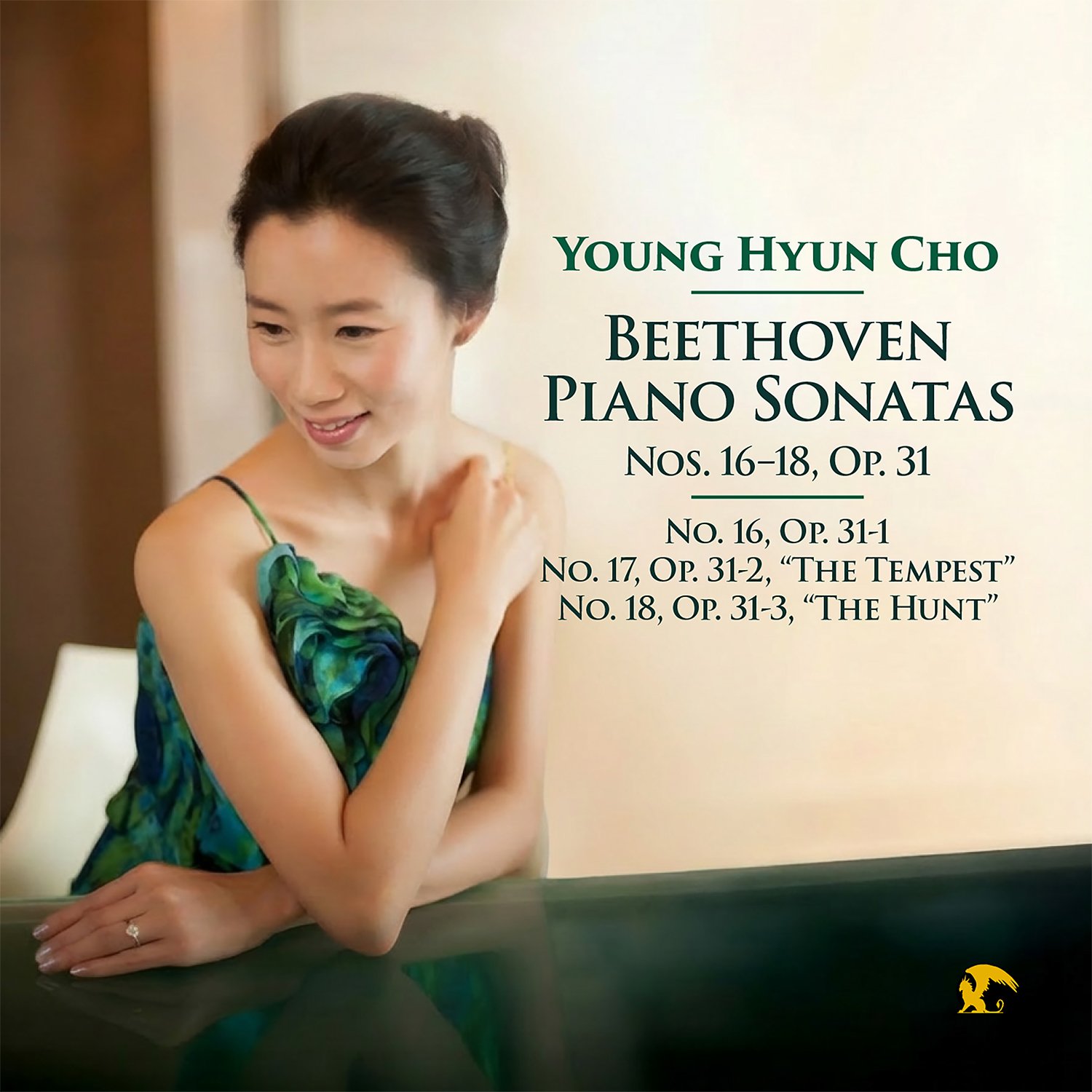
The three sonatas of Opus 31, composed in 1801 and 1802, mark a decisive turning point in Beethoven’s creative life. Written at the beginning of his middle period, right as he was confronting his worsening deafness and penning the anguished Heiligenstadt Testament, these works demonstrate a radical shift from Classical convention toward bold experimentation, stronger personal emotion, and expanded forms.
Pianist Young Hyun Cho, who has been praised by Aachener Zeitung (Germany) as “...a blessed interpreter of Beethoven...,” brings her impeccable technique and expressive depth to these three contrasting sonatas. Her recordings have received worldwide critical acclaim, with Textura noting that “Cho’s complete set of Beethoven’s sonatas would be well worth requiring” and praising her “impeccable technique and the clarity of expression and articulation.”
Sonata No. 16 in G Major, Op. 31 No. 1
I. Allegro vivace (6:36)
II. Adagio grazioso (12:10)
III. Rondo. Allegretto (6:40)
Sonata No. 17 in D Minor, Op. 31 No. 2 “The Tempest”
I. Largo – Allegro (8:51)
II. Adagio (8:52)
III. Allegretto (6:37)
Sonata No. 18 in E-Flat Major, Op. 31 No. 3 “The Hunt”
I. Allegro (9:08)
II. Scherzo. Allegretto vivace (4:53)
III. Menuetto. Moderato e grazioso (4:59)
IV. Presto con fuoco (5:06)