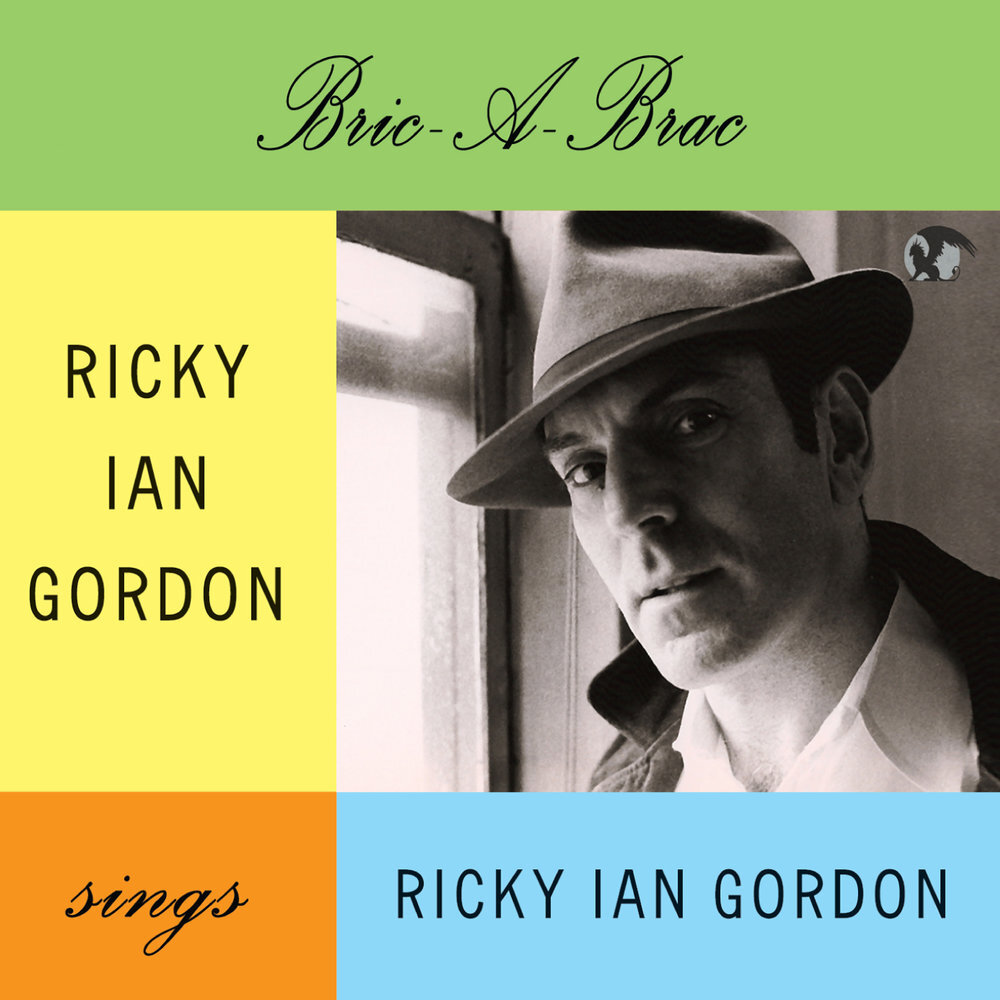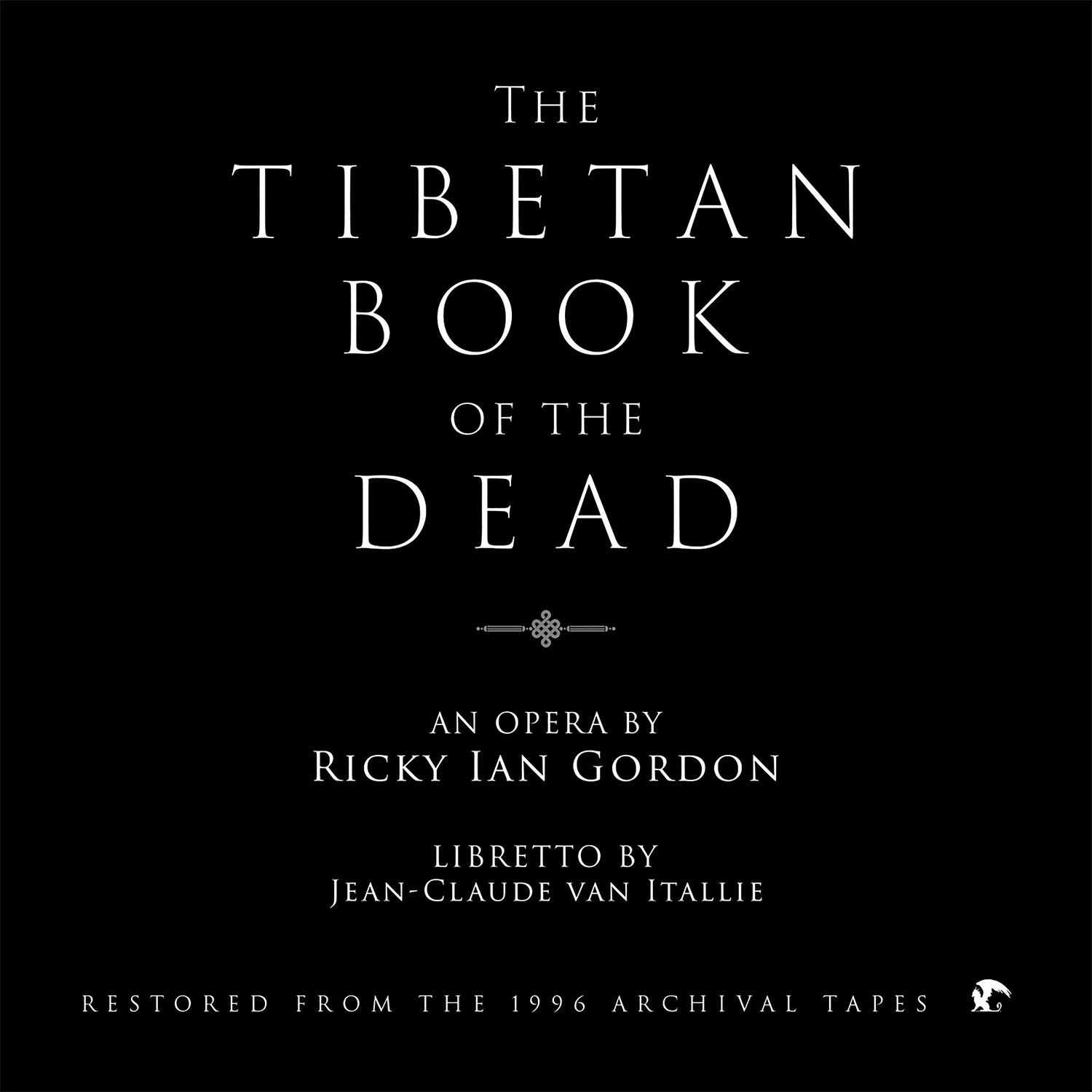
On August 14, Blue Griffin Recording releases The Tibetan Book of the Dead: An Opera by Ricky Ian Gordon, restored from the 1996 Archival Tapes from The American Music Theater Festival from June 12–14, 1996. Co-Commissioned by Houston Grand Opera and The American Music Theatre Festival in 1995, The Tibetan Book of the Dead is based on ancient Tibetan Buddhist teachings on death and rebirth, and depicts the epic journey of a dying soul through a series of spiritual and emotional planes along the road of rebirth.
These archival recordings feature an incredible cast of artists from The Houston Grand Opera studio: baritone Frank Hernandez, bass Eric Owens, sopranos Nicole Heaston and Jonita Lattimore, mezzo-sopranos Beth Clayton and Jill Grove, tenors John McVeigh and Gabriel Gonzalez, and Orchestra 2001 conducted by Charles Prince.
Ricky Ian Gordon states, “For a long time, because of the traumatic conditions under which my opera The Tibetan Book of the Dead was written, I kept it hidden in my deepest cabinet and never dared to listen to it. Maybe fifteen years after its premiere, I listened to what had been recorded, and what I felt was that there was an astonishing beauty and power to it that I almost had nothing to do with. The piece had to be written so fast and its own sense of urgency almost disappeared me to myself and the piece shot out of me like a rocket ship I had very little time to reflect on.”
The origins and premiere of The Tibetan Book of the Dead are deeply intertwined with Ricky Ian Gordon’s relationship with Jeffrey Grossi, who was already living with HIV when they first met. In 1993, it was Grossi who introduced Gordon to Sogyal Rinpoche’s “The Tibetan Book of Living and Dying”, and asked him to learn its Buddhist teachings in order to help Grossi die as a Buddhist. Later, while immersed in the transformative book, David Gockley, who had asked Gordon for a commission from The Houston Grand Opera, visited him in New York City, and suggested turning the book into an opera. Ricky’s friend, the playwright and librettist, William Hoffman, then introduced him to librettist Jean-Claude van Itallie, who sent him the text within two days of his meeting with David.
The libretto dramatizes, in seventeen scenes, the death of an individual, the journey through the “bardo,” (in between) and the rebirth. It came together very quickly, and in many ways, just in time, as despite his AIDS keeping him largely confined to his bed, Jeffrey was able to travel to both Houston (where he got so sick he had to be sent home before he could see it) and finally, Philadelphia for the premiere there in June 1996 where these original cassette tapes were made. Sadly, it was only a few weeks after, on July 3rd, when Jeffrey was admitted into the hospital before passing away on August 1st.
While working with his friend and engineer Josh Arbo on the audio book of his memoir, Seeing Through: A Chronicle of Sex, Drugs, and Opera for Audible.com, they began playing around with old recordings of Gordon’s to see if they could bring them back to life through today’s technology. It was then they reached out to Sergei Kvitko and brought him in to what they were doing. As Sergei says in the opening of the booklet notes, “Finding these tapes was a discovery, but restoring them became a painstaking obsession. The recovery involved a grueling, time-intensive process of AI-assisted stem separation to peel back decades of hiss and degradation. The result is a minor miracle: while the sonic limitations of the original source remain evident, the clarity achieved through this ‘digital archaeology’ allows the heart of the performance to finally be heard.”
When listening to Sergei’s restorations, Ricky Ian Gordon shared, “this is like bringing back to life the man I loved for whom I wrote this opera to help him leave the world as a Buddhist, which is what he asked me to do. This is a profound document, a testament to probably the most intense moment of my life. This is, for me, a miracle of reincarnation.”
Synopsis
Based on some of the most sacred and revered texts ever written, THE TIBETAN BOOK OF THE DEAD depicts the epic journey of a dying soul through a series of spiritual and emotional planes along the road of rebirth.
The Dying (9:12)
The Moment of Death (4:30)
Clear White Light (2:24)
The Peaceful Energies (15:34)
Rainbow Dance (3:30)
Dream-like Realms (9:50)
The Angry Energies (2:22)
Mahakala (0:20)
Lord of Death (2:04)
Wandering Prayer (6:51)
Realizing I Am Dead (5:49)
Pursued by Demons (8:07)
Hungry Ghost (1:42)
Love Making (2:51)
Refusing To See (7:07)
Choosing a Home (5:37)
Entering Again (3:03)
Total Time: 91:00